A man is no fool who gives up that which he cannot keep in order to gain that which he cannot lose. – Author Disputed (Jim Elliot/Rev. Matthew Henry)
Countercultural Vows

In 2008, while I was working as a DRE (Director of Religious Education), I had the privilege of spending time with a wonderful, young Franciscan priest, Fr. Sharbel. While visiting the parish school he would explain to the students that he had taken vows of Poverty, Chastity, and Obedience. As he explained it, in his thick Australian accent, “that means No Money, No Honey, and I have a Boss!” He would go on to explain to the students that he owned nothing. The grey habit and simple wrist watch he wore once belonged to an older priest who had died. His sandals and wallet were hand-me-downs or a gift to the Order. He told them that nothing was his own and everything he used would be passed on, if it were still in decent condition, when he died.
In our affluent, materialistic, consumeristic, advertisement-saturated world this is hard for us to imagine. We may be tempted to cry out with Jesus’ disciples, “This is a hard saying; who can listen to it?”(John 6:60). Yet, doesn’t the last sentence of the previous paragraph apply to us as well? “…nothing is your own and everything you use will be passed on…”
In today’s Gospel Jesus tells us that the Kingdom of Heaven is like a treasure buried in a field and pearl of great price. In both instances, the one who finds them and recognizes their value “sells everything he has and buys it.” Fr. Sharbel had found his treasure and sold everything he had in order to gain this treasure. You and I can do the same but it is not easy. I would say it’s even more difficult for us today because of our massive quantities of stuff…stuff that will inevitably be passed on to someone else.
The Problem with Stuff
Stuff, meaning our worldly possessions, pose many problems for growth in holiness.
- First, some stuff is never enough. The more we have, the more we want. Of course the worst cases of this we tend to call “hoarders”. Yet, I’m guilty of being a hoarder to some extent as well. I can still walk easily through my home but my collection of books, many unread, may be out of control.
- Second, we tend to become possessed by our possessions. Meaning that oftentimes our stuff rules over us refusing to allow us to let it go. Why do I not give away a book that I have read, studied, taken notes on, and used to change my life so that someone else might do the same!? I falsely believe it’s mine; forgetting that I can’t take it with me.
- Third, stuff can make us selfish. We want more and more. We become possessed by the power of our stuff. These two things combine to make us selfish crying out in our hearts like Gollum from the Lord of the Rings, “My precious.” The very thing that moments or perhaps years before we didn’t even know existed, is now the thing we feel as though we can’t live without!
Antidotes to Stuff
Stuff, like the fruit in the Garden of Eden: can be good for food, delightful to the eyes, and desired to make one wise, but it can and often does lead us away from God. The vows of Fr. Sharbel and others present an antidote to the poison hidden in the fruit of stuff.
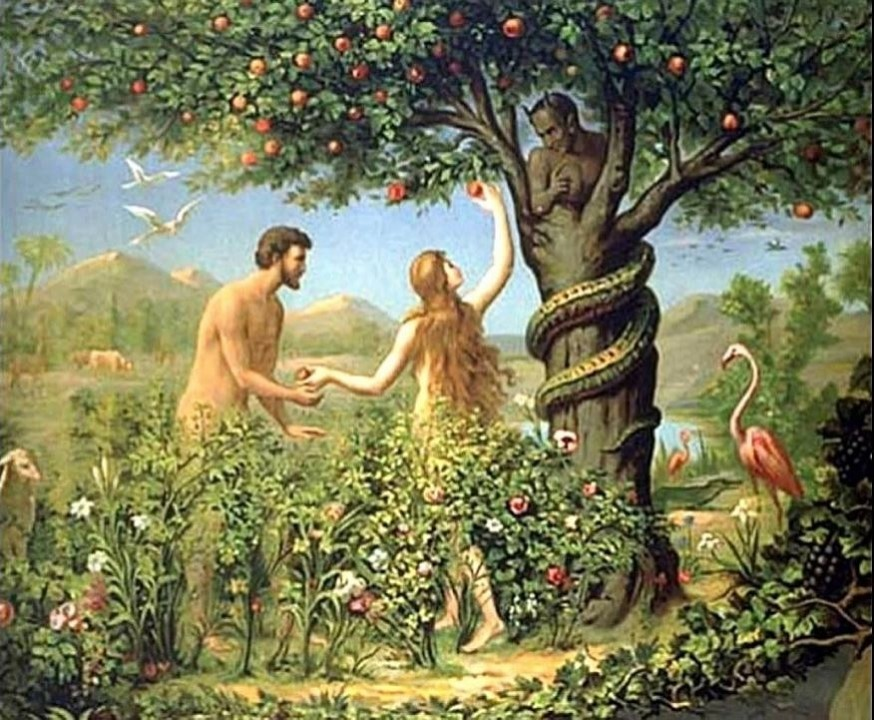
- Poverty – can be good for food – Adam and Eve could eat from any of the trees in the Garden. They had enough, they had plenty! Yet, they wanted more. Recognizing that we have enough is a first step or the first shovel full of dirt toward uncovering the treasure hidden. When we learn to be thankful for what we have and desire less, the digging gets easier!
- Chastity – delightful to the eyes – What could have been more delightful to the eyes than the Garden itself! Yet, weakened by their desire for more they chose to misuse their gifts. While chastity primarily relates to the proper use of the sexual gifts, we can apply this vow to the proper use of all gifts; including stuff. When we learn the proper use of things we will no longer desire that which cannot truly benefit our growth in holiness. We will realize that although it is delightful to the eyes and it’s Prime Days, we really don’t need it. We’ll also find that the Pearl, the Kingdom, is a far greater deal!
- Obedience – desired to make one wise – Adam and Eve were created perfect, without sin. Their hearts, minds, souls, and bodies were perfectly aligned with the will of the Father. Yet, desiring more, full of FOMO (Fear of Missing Out), they sought wisdom beyond what was rightfully theirs in disobedience. The wisdom they gained was merely the knowledge of evil. Obedience to God, the laws of the Church, to our confessor, and those in positions of authority can help us be truly wise when it comes to stuff. Disobedience to living simple, ordered lives leads to hoarding and being possessed by our possessions. Obedience offers a gentle reminder that “what does it profit a man to gain the whole world and lose his soul”.
Living the Vows in Our Own Life
While we may not be called to take the vows of Poverty, Chastity, and Obedience in our own lives, adopting a mindset of those vows can help us uncover the treasure and find the pearl. Here are some ideas on how to live those vows:
- Poverty
- Institute a purchasing Fast. Only buy things you actually need (not want) like food, medicine, fuel for work, etc.
- Avoid impulse purchases whether at the checkout or online. Record when you are tempted, record the amount, and give that to charity.
- Give stuff away! If you haven’t worn those clothes in years, give them away. If you are finished with the book, give it to someone.
- Chastity
- Make sure you are using the stuff you haven’t given away in an rightly-ordered way. Food? Eat what is needed for the body. Media? Destroy it or at least set time limits. Sex? Review what is right for your state in life. Drink? Is it’s use to benefit the body or destroy body and mind?
- Obedience
- Review the Precepts of the Church and follow them. If you fail, try again. Don’t give up.
- Begin or continue studying the Catechism of the Catholic Church and strive to live up to the teachings to the best of your ability.
These vows are not easy to live for religious or laity. They are challenging at times. Yet, the treasure in the field wasn’t simply sitting there. It was buried and the man had to work to get to it. The pearl wasn’t simply lying on the beach. It was sought, perhaps for many, many years. Don’t stop digging. Don’t stop searching. Enlist others in your quest; some hold treasure maps and others know where the oyster beds can be found!
Helpful books for simplifying your life
The Perfect Joy of St. Francis
Happy are You Poor: The Simple Life and Spiritual Freedom
Learn to understand the Lord more clearly using my Free Book.


 James M. Hahn, Author